Childhood memory
David CopperfieldChildhood memory in David Copperfield is not presented as a complete record waiting intact in the mind. It is a changing account assembled by an adult narrator from reported facts, vivid early impressions, later testimony, and acknowledged gaps. Its importance lies in the way it gives a vulnerable child’s perceptions enduring force while also showing how loss and hardship alter the story that can be told about a life.
Memory, Evidence, and Retrospective Authority
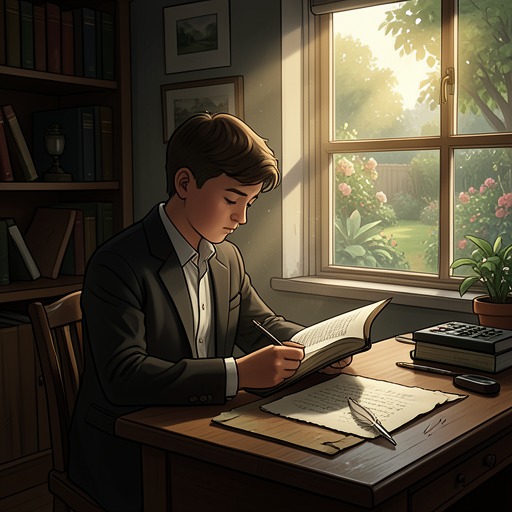
The narrative opens by asking whether David Copperfield will prove the hero of his own life, and makes the pages that follow the means of answering. His birth, however, cannot be recalled from personal experience: he records it as something he has been informed of and believes. He was born on a Friday at midnight, as the clock began to strike, and neighborhood predictions attached both ill fortune and an ability to see spirits to the hour. The adult narrator treats those predictions with wry distance, leaving the course of his history to test the first and gently dismissing the second. The opening thus establishes a difference between inherited knowledge and lived memory before the narrative reaches childhood scenes.
That distinction remains active when the remembered past begins. David says that his earliest impressions may be difficult to separate from actual recollection, yet argues that very young children can observe with remarkable closeness and accuracy. He regards himself as having retained that childhood faculty into adulthood, along with a freshness and capacity for pleasure. Memory therefore serves as more than a source of scenes: it becomes part of his claim to be a careful witness to the child he once was. At the same time, the narrative does not conceal the uncertainty involved in that claim. The first impressions emerge from what he calls the blank of infancy, and the adult account openly marks where fancy and recollection touch.
The First Remembered World
The earliest figures to stand out are Clara Copperfield and Clara Peggotty. David remembers the contrast between his mother’s youthful appearance and Peggotty’s strong, dark-eyed presence, and recalls moving unsteadily between them as they stooped or knelt to meet him. The tactile impression of Peggotty’s needle-roughened finger is especially vivid, though he cannot certify it as an exact memory. Such small bodily details make the past feel close without pretending that its reconstruction is perfect.
The remembered home is likewise built from a child’s scale and attention. The kitchen opens toward a yard where empty pigeon-house and dog-kennel, towering fowls, a fierce-seeming cock, and pursuing geese turn familiar surroundings into a world of watchful threats and nightly dreams. A passage, a dark storeroom, its tubs and jars, and its mingled smells become part of the same mental landscape. The details are not merely a setting recovered in adulthood; they show how a child’s memory selects and enlarges what has made an impression. The home’s emotional character also depends on what the child has been told: the best parlour carries a doleful association with his father’s funeral.
Love Preserved Through Loss
The remembered image of Clara Copperfield is especially resistant to the passage of time. David recalls her youthful beauty and a bedtime scene in which she kneels playfully beside him, laughing and asking him to repeat what guests had said about her. The adult narrator insists that this face remains present to memory even though he knows she has changed and died. His recollection does not claim to restore her whole life; it preserves the affectionate image that the child cherished.
After Clara Copperfield’s death, Clara Peggotty recounts the mother’s final hours. In her account, Clara Copperfield speaks of her husband’s kindness and asks Peggotty to bring her close, placing her head on Peggotty’s arm before she dies. David explains that this testimony does not replace his earlier memories with an image of his mother in illness. Instead, it roots the first image more firmly: the mother who remains in his mind is the young woman of his earliest impressions, with her bright curls and their twilight dancing. Death and testimony thus shape recollection by selecting and fixing an image, while the child held in that remembered mother’s arms becomes part of the same enduring scene.
Memory Under Discipline and Labor
The adult narrator’s recollections also expose how childhood experience is formed under unequal power. After Edward Murdstone and Jane Murdstone take control of lessons at home, study becomes a daily ordeal rather than the gentle activity David remembers learning beside his mother. Clara Copperfield is nominally in charge, but the Murdstones direct the lessons and use them to impose their doctrine of firmness. David remembers the mounting arrears, his and his mother’s bewildered looks, and Jane Murdstone’s warning when Clara Copperfield tries to help him silently. Edward Murdstone then throws the book at David or boxes his ears and pushes him from the room. The adult account connects a child’s failure to learn not to lack of ability, but to fear, confusion, and the adults’ coercive method.
That history continues beyond the home. Salem House is nearly empty when David arrives during the holiday, sent there as punishment; its dirty, bare schoolroom, discarded exercises, neglected animals, and oppressive stillness make the institution part of the remembered punishment. Later, at ten years old, he is sent to work in Murdstone and Grinby’s warehouse. The adult narrator recalls the waterside building, the rats, and the repetitive labor of inspecting and washing bottles, labeling full ones, fitting corks, sealing them, and packing them. He remembers comparing himself with his former school companions and feeling that his hopes of becoming learned and distinguished were being crushed. The tears he mingles with the bottle-washing water make memory a record of the emotional cost of child labor as well as its tasks.
Rupture, Silence, and Return
David’s account also preserves limits: some periods can be narrated only as a gap or a sealed-off experience. After Betsey Trotwood takes him in and his name becomes Trotwood Copperfield, he describes his earlier life as receding into distance and his time at Murdstone and Grinby’s as a curtain that he raises only briefly. He cannot say how long that warehouse life lasted, and admits that its pain has kept him from examining it. The omission is not evidence that the experience mattered little; his account makes its lasting distress the reason it remains difficult to revisit.
His return to school shows that hardship alters not only what a child remembers but how he understands himself among others. At Doctor Strong’s school, David feels that his experiences with the Micawber family, London streets, and scraping together money for food have separated him from ordinary schoolboy life. He has lost ground in lessons and games, and fears that his earlier life may be visible in his look or gestures. The adult narrator places this social unease beside the earlier account of being cast into labor: his childhood has included experiences his new companions cannot know, and memory carries them into a setting that seems to promise a fresh beginning. Across these shifts, childhood recollection preserves both the textures of ordinary affection and the lasting marks of deprivation, while the act of retelling makes those fragments legible as one life.